Part 2
Communications Network
Pinpoint Tests
Pinpoint Test S: No Medium Speed Controller Area Network (MS-CAN) Communication, All Modules Are Not Responding
Refer to Wiring Diagram Set 14, Module Communications Network for schematic and connector information. Diagrams By Number
Normal Operation
The Medium Speed Controller Area Network (MS-CAN) uses an unshielded twisted pair cable which provide the network connection to all modules on the network.
This pinpoint test is intended to diagnose the following:
- Wiring, terminals or connectors
- Data Link Connector (DLC)
- Accessory Protocol Interface Module (APIM) (if equipped)
- Audio Control Module (ACM)
- Driver Seat Module (DSM) (if equipped)
- Global Positioning System Module (GPSM) (if equipped)
- HVAC module (if equipped)
- Instrument Cluster (IC)
- Parking Aid Module (PAM) (if equipped)
- Power Running Board (PRB) module (if equipped)
- Rear Entertainment Module (RETM) (if equipped)
- Satellite Digital Audio Receiver System (SDARS) module (if equipped)
- Smart Junction Box (SJB)
PINPOINT TEST S: NO MS-CAN COMMUNICATION, ALL MODULES ARE NOT RESPONDING
NOTICE: Use the correct probe adapter(s) when making measurements. Failure to use the correct probe adapter(s) may damage the connector.
NOTE: Most faults are due to connector and/or wiring concerns. Carry out a thorough inspection and verification before proceeding with the pinpoint test. Inspection and Verification
NOTE: Failure to disconnect the battery when instructed will result in false resistance readings. Refer to Battery.
-------------------------------------------------
S31 CHECK THE MS-CAN (+) AND MS-CAN (-) CIRCUITS FOR A SHORT TO GROUND WITH THE ACM DISCONNECTED
- Disconnect: ACM C290b.
- Measure the resistance between the DLC C251-3, circuit VDB06 (GY/OG), harness side and ground; and between the DLC C251-11, circuit VDB07 (VT/OG), harness side and ground.
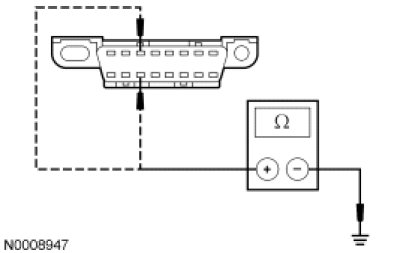
- Are the resistances greater than 1,000 ohms?
Yes
CONNECT the negative battery cable. GO to S50.
No
GO to S32.
-------------------------------------------------
S32 VERIFY VEHICLE EQUIPMENT - HVAC MODULE
- Inspect the vehicle for an HVAC module.
- Is the vehicle equipped with an HVAC module?
Yes
GO to S33.
No
GO to S34.
-------------------------------------------------
S33 CHECK THE MS-CAN (+) AND MS-CAN (-) CIRCUITS FOR A SHORT TO GROUND WITH THE HVAC MODULE DISCONNECTED
- Disconnect: HVAC Module C228a.
- Measure the resistance between the DLC C251-3, circuit VDB06 (GY/OG), harness side and ground; and between the DLC C251-11, circuit VDB07 (VT/OG), harness side and ground.
- Are the resistances greater than 1,000 ohms?
Yes
CONNECT the negative battery cable. GO to S51.
No
GO to S34.
-------------------------------------------------
S34 VERIFY VEHICLE EQUIPMENT - RETM
- Inspect the vehicle for a RETM.
- Is the vehicle equipped with an RETM?
Yes
GO to S35.
No
GO to S36.
-------------------------------------------------
S35 CHECK THE MS-CAN (+) AND MS-CAN (-) CIRCUITS FOR A SHORT TO GROUND WITH THE RETM DISCONNECTED
- Disconnect: RETM C9029.
- Measure the resistance between the DLC C251-3, circuit VDB06 (GY/OG), harness side and ground; and between the DLC C251-11, circuit VDB07 (VT/OG), harness side and ground.
- Are the resistances greater than 1,000 ohms?
Yes
CONNECT the negative battery cable. GO to S52.
No
GO to S36.
-------------------------------------------------
S36 VERIFY VEHICLE EQUIPMENT - DSM
- Inspect the vehicle for a DSM.
- Is the vehicle equipped with a DSM?
Yes
GO to S37.
No
GO to S38.
-------------------------------------------------
S37 CHECK THE MS-CAN (+) AND MS-CAN (-) CIRCUITS FOR A SHORT TO GROUND WITH THE DSM DISCONNECTED
- Disconnect: DSM C341c.
- Measure the resistance between the DLC C251-3, circuit VDB06 (GY/OG), harness side and ground; and between the DLC C251-11, circuit VDB07 (VT/OG), harness side and ground.
- Are the resistances greater than 1,000 ohms?
Yes
CONNECT the negative battery cable. GO to S53.
No
GO to S38.
-------------------------------------------------
S38 VERIFY VEHICLE EQUIPMENT - SDARS MODULE
- Inspect the vehicle for a SDARS module.
- Is the vehicle equipped with a SDARS module?
Yes
GO to S39.
No
GO to S40.
-------------------------------------------------
S39 CHECK THE MS-CAN (+) AND MS-CAN (-) CIRCUITS FOR A SHORT TO GROUND WITH THE SDARS MODULE DISCONNECTED
- Disconnect: SDARS Module C3290.
- Measure the resistance between the DLC C251-3, circuit VDB06 (GY/OG), harness side and ground; and between the DLC C251-11, circuit VDB07 (VT/OG), harness side and ground.
- Are the resistances greater than 1,000 ohms?
Yes
CONNECT the negative battery cable. GO to S54.
No
GO to S40.
-------------------------------------------------
S40 VERIFY VEHICLE EQUIPMENT - PRB MODULE
- Inspect the vehicle for a PRB module.
- Is the vehicle equipped with a PRB module?
Yes
GO to S41.
No
GO to S42.
-------------------------------------------------
S41 CHECK THE MS-CAN (+) AND MS-CAN (-) CIRCUITS FOR A SHORT TO GROUND WITH THE PRB MODULE DISCONNECTED
- Disconnect: PRB Module C4322b.
- Measure the resistance between the DLC C251-3, circuit VDB06 (GY/OG), harness side and ground; and between the DLC C251-11, circuit VDB07 (VT/OG), harness side and ground.
- Are the resistances greater than 1,000 ohms?
Yes
CONNECT the negative battery cable. GO to S55.
No
GO to S42.
-------------------------------------------------
S42 VERIFY VEHICLE EQUIPMENT - PAM
- Inspect the vehicle for a PAM.
- Is the vehicle equipped with a PAM?
Yes
GO to S43.
No
GO to S44.
-------------------------------------------------
S43 CHECK THE MS-CAN (+) AND MS-CAN (-) CIRCUITS FOR A SHORT TO GROUND WITH THE PAM DISCONNECTED
- Disconnect: PAM C4014 (Mountaineer), C3267 (Explorer Sport Trac) or C4226 (Explorer).
- Measure the resistance between the DLC C251-3, circuit VDB06 (GY/OG), harness side and ground; and between the DLC C251-11, circuit VDB07 (VT/OG), harness side and ground.
- Are the resistances greater than 1,000 ohms?
Yes
CONNECT the negative battery cable. GO to S56.
No
GO to S44.
-------------------------------------------------
S44 VERIFY VEHICLE EQUIPMENT - APIM
- Inspect the vehicle for an APIM.
- Is the vehicle equipped with an APIM?
Yes
GO to S45.
No
GO to S46.
-------------------------------------------------
S45 CHECK THE MS-CAN (+) AND MS-CAN (-) CIRCUITS FOR A SHORT TO GROUND WITH THE APIM DISCONNECTED
- Disconnect: APIM C3342.
- Measure the resistance between the DLC C251-3, circuit VDB06 (GY/OG), harness side and ground; and between the DLC C251-11, circuit VDB07 (VT/OG), harness side and ground.
- Are the resistances greater than 1,000 ohms?
Yes
CONNECT the negative battery cable. GO to S57.
No
GO to S46.
-------------------------------------------------
S46 VERIFY VEHICLE EQUIPMENT - GPSM
- Inspect the vehicle for a Global Positioning System Module (GPSM).
- Is the vehicle equipped with a GPSM?
Yes
GO to S47.
No
GO to S48.
-------------------------------------------------
S47 CHECK THE MS-CAN (+) AND MS-CAN (-) CIRCUITS FOR A SHORT TO GROUND WITH THE GPSM DISCONNECTED
- Disconnect: GPSM C2398.
- Measure the resistance between the DLC C251-3, circuit VDB06 (GY/OG), harness side and ground; and between the DLC C251-11, circuit VDB07 (VT/OG), harness side and ground.
- Are the resistances greater than 1,000 ohms?
Yes
CONNECT the negative battery cable. GO to S58.
No
GO to S48.
-------------------------------------------------
S48 CHECK THE MS-CAN (+) AND MS-CAN (-) CIRCUITS FOR A SHORT TO GROUND WITH THE SJB DISCONNECTED
- Disconnect: SJB C2280d.
- Measure the resistance between the DLC C251-3, circuit VDB06 (GY/OG), harness side and ground; and between the DLC C251-11, circuit VDB07 (VT/OG), harness side and ground.
- Are the resistances greater than 1,000 ohms?
Yes
CONNECT the negative battery cable. GO to S59.
No
REPAIR the circuit in question. CONNECT all modules. CONNECT the negative battery cable. CLEAR the DTCs. REPEAT the network test with the scan tool.
-------------------------------------------------
S49 CHECK FOR CORRECT IC OPERATION
- Disconnect the IC connector.
- Check for:
- corrosion
- damaged pins
- pushed-out pins
- Connect the IC connector and make sure it seats correctly.
- Operate the system and verify the concern is still present.
- Is the concern still present?
Yes
INSTALL a new IC. REFER to Instrument Panel, Gauges and Warning Indicators. CONNECT all modules. CLEAR the DTCs. REPEAT the network test with the scan tool.
No
The system is operating correctly at this time. The concern may have been caused by a loose or corroded connector. CONNECT all modules. CLEAR the DTCs. REPEAT the network test with the scan tool.
-------------------------------------------------
S50 CHECK FOR CORRECT ACM OPERATION
- Disconnect all the ACM connectors.
- Check for:
- corrosion
- damaged pins
- pushed-out pins
- Connect all the ACM connectors and make sure they seat correctly.
- Operate the system and verify the concern is still present.
- Is the concern still present?
Yes
INSTALL a new ACM. REFER to Accessories and Optional Equipment. CONNECT all modules. CLEAR the DTCs. REPEAT the network test with the scan tool.
No
The system is operating correctly at this time. The concern may have been caused by a loose or corroded connector. CONNECT all modules. CLEAR the DTCs. REPEAT the network test with the scan tool.
-------------------------------------------------
S51 CHECK FOR CORRECT HVAC MODULE OPERATION
- Disconnect all the HVAC module connectors.
- Check for:
- corrosion
- damaged pins
- pushed-out pins
- Connect all the HVAC module connectors and make sure they seat correctly.
- Operate the system and verify the concern is still present.
- Is the concern still present?
Yes
INSTALL a new HVAC module. CONNECT all modules. CLEAR the DTCs. REPEAT the network test with the scan tool.
No
The system is operating correctly at this time. The concern may have been caused by a loose or corroded connector. CONNECT all modules. CLEAR the DTCs. REPEAT the network test with the scan tool.
-------------------------------------------------
S52 CHECK FOR CORRECT RETM OPERATION
- Disconnect the RETM connector.
- Check for:
- corrosion
- damaged pins
- pushed-out pins
- Connect the RETM connector and make sure it seats correctly.
- Operate the system and verify the concern is still present.
- Is the concern still present?
Yes
INSTALL a new RETM. REFER to Accessories and Optional Equipment. CONNECT all modules. CLEAR the DTCs. REPEAT the network test with the scan tool.
No
The system is operating correctly at this time. The concern may have been caused by a loose or corroded connector. CONNECT all modules. CLEAR the DTCs. REPEAT the network test with the scan tool.
-------------------------------------------------
S53 CHECK FOR CORRECT DSM OPERATION
- Disconnect all the DSM connectors.
- Check for:
- corrosion
- damaged pins
- pushed-out pins
- Connect all the DSM connectors and make sure they seat correctly.
- Operate the system and verify the concern is still present.
- Is the concern still present?
Yes
INSTALL a new DSM. REFER to Body Control Systems. CONNECT all modules. CLEAR the DTCs. REPEAT the network test with the scan tool.
No
The system is operating correctly at this time. The concern may have been caused by a loose or corroded connector. CONNECT all modules. CLEAR the DTCs. REPEAT the network test with the scan tool.
-------------------------------------------------
S54 CHECK FOR CORRECT SDARS MODULE OPERATION
- Disconnect the SDARS module connector.
- Check for:
- corrosion
- damaged pins
- pushed-out pins
- Connect the SDARS module connector and make sure it seats correctly.
- Operate the system and verify the concern is still present.
- Is the concern still present?
Yes
INSTALL a new SDARS module. REFER to Accessories and Optional Equipment. CONNECT all modules. CLEAR the DTCs. REPEAT the network test with the scan tool.
No
The system is operating correctly at this time. The concern may have been caused by a loose or corroded connector. CONNECT all modules. CLEAR the DTCs. REPEAT the network test with the scan tool.
-------------------------------------------------
S55 CHECK FOR CORRECT PRB MODULE OPERATION
- Disconnect all the PRB module connectors.
- Check for:
- corrosion
- damaged pins
- pushed-out pins
- Connect all the PRB module connectors and make sure they seat correctly.
- Operate the system and verify the concern is still present.
- Is the concern still present?
Yes
INSTALL a new PRB module. REFER to Auxiliary Step / Running Board. CONNECT all modules. CLEAR the DTCs. REPEAT the network test with the scan tool.
No
The system is operating correctly at this time. The concern may have been caused by a loose or corroded connector. CONNECT all modules. CLEAR the DTCs. REPEAT the network test with the scan tool.
-------------------------------------------------
S56 CHECK FOR CORRECT PAM OPERATION
- Disconnect the PAM connector.
- Check for:
- corrosion
- damaged pins
- pushed-out pins
- Connect the PAM connector and make sure it seats correctly.
- Operate the system and verify the concern is still present.
- Is the concern still present?
Yes
INSTALL a new PAM. REFER to Collision Avoidance and Parking Assist Systems. CONNECT all modules. CLEAR the DTCs. REPEAT the network test with the scan tool.
No
The system is operating correctly at this time. The concern may have been caused by a loose or corroded connector. CONNECT all modules. CLEAR the DTCs. REPEAT the network test with the scan tool.
-------------------------------------------------
S57 CHECK FOR CORRECT APIM OPERATION
- Disconnect the APIM connector.
- Check for:
- corrosion
- damaged pins
- pushed-out pins
- Connect the APIM connector and make sure it seats correctly.
- Operate the system and verify the concern is still present.
- Is the concern still present?
Yes
INSTALL a new APIM. REFER to Accessories and Optional Equipment. CONNECT all modules. CLEAR the DTCs. REPEAT the network test with the scan tool.
No
The system is operating correctly at this time. The concern may have been caused by a loose or corroded connector. CONNECT all modules. CLEAR the DTCs. REPEAT the network test with the scan tool.
-------------------------------------------------
S58 CHECK FOR CORRECT GPSM OPERATION
- Disconnect the GPSM connector.
- Check for:
- corrosion
- damaged pins
- pushed-out pins
- Connect the GPSM connector and make sure it seats correctly.
- Operate the system and verify the concern is still present.
- Is the concern still present?
Yes
INSTALL a new GPSM. REFER to Accessories and Optional Equipment. CONNECT all modules. CLEAR the DTCs. REPEAT the network test with the scan tool.
No
The system is operating correctly at this time. The concern may have been caused by a loose or corroded connector. CONNECT all modules. CLEAR the DTCs. REPEAT the network test with the scan tool.
-------------------------------------------------
S59 CHECK FOR CORRECT SJB OPERATION
- Disconnect all the SJB connectors.
- Check for:
- corrosion
- damaged pins
- pushed-out pins
- Connect all the SJB connectors and make sure they seat correctly.
- Operate the system and verify the concern is still present.
- Is the concern still present?
Yes
INSTALL a new SJB. REFER to Body Control Systems. CONNECT all modules. CLEAR the DTCs. REPEAT the network test with the scan tool.
No
The system is operating correctly at this time. The concern may have been caused by a loose or corroded connector. CONNECT all modules. CLEAR the DTCs. REPEAT the network test with the scan tool.
-------------------------------------------------