Manifold Pressure/Vacuum Sensor: Testing and Inspection
Chart C-1D:
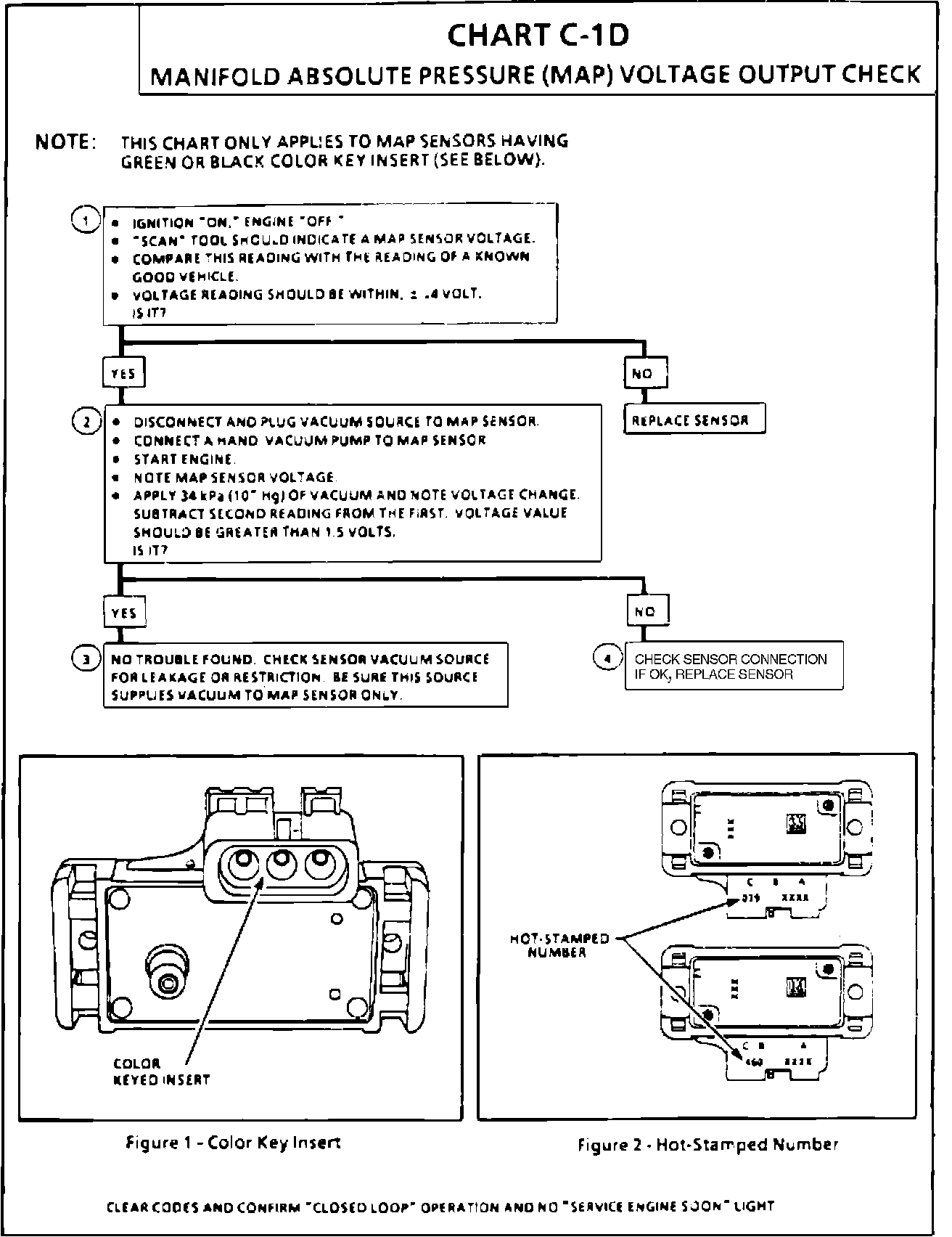
Chart C-1D Wiring Diagram:
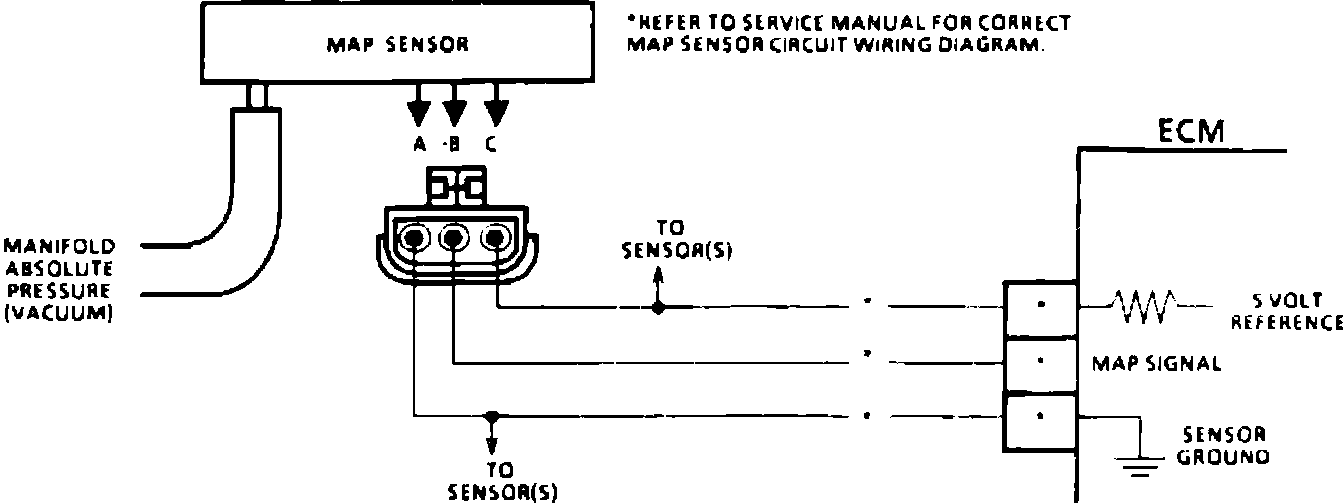
***UPDATED BY TSB # 90-199-6E DATED MARCH 1990
CIRCUIT DESCRIPTION:
The manifold absolute pressure sensor (MAP) measures manifold pressure (vacuum) which results from engine load and rpm changes and converts these into a voltage output. The ECM sends a 5 volt reference to the MAP sensor. As the the manifold pressure changes the output voltage to the ECM from the sensor also changes. By monitoring the sensor output voltage the ECM knows the manifold pressure. A lower pressure (low voltage) output will be about 1 to 2 volts at idle. While higher pressure (high voltage) output will be about 4-4.8 volts at wide open throttle. The MAP sensor is also used under certain conditions to determine the barometric pressure. The ECM uses the the MAP sensor to control fuel delivery and igniting timing.
TEST DESCRIPTION: Numbers below refer to circled numbers on the diagnostic chart.
Important: Be sure to use the same diagnostic equipment for all measurements.
1. When comparing "Scan" readings to a known good vehicle, it is important to compare vehicles that have the same color insert in the MAP sensor or the same "Hot Stamp" number.
2. Applying 34 kPa (10 inches Hg) vacuum to the MAP sensor should cause the voltage to change. Subtract second reading from the first. Voltage value should be greater than 1.5 volts. Upon applying vacuum to the sensor, the change in voltage should be instantaneous. A slow voltage change indicates a faulty sensor.
3. Check vacuum hose to sensor for leaking or restriction, Be sure no other vacuum devices are connected to the MAP hose.
NOTE: Make sure electrical connector remains securely fastened.
4. Disconnect the sensor from bracket and twist sensor by hand (only) to check for intermittent connection. Output changes greater than 1 volt indicate a bad connection or connector. If OK replace sensor.