Antilock Brakes / Traction Control Systems: Description and Operation
ABS ConstructionThe ABS (Antilock Brake System) controls the fluid pressure applied to the wheel cylinder of each brake from the master cylinder so that each wheel is not locked even when hard braking is applied.
This ABS has also the following function.
While braking is applied, but before ABS control becomes effective, braking force is distributed between the front and rear so as to prevent the rear wheels from being locked too early for better stability of the vehicle.
The main component parts of this ABS include the following parts in addition to those of the conventional brake system.
^ Wheel speed sensor which senses revolution speed of each wheel and outputs its signal.
^ ABS warning lamp which lights to inform abnormality when system fails to operate properly.
^ ABS hydraulic unit/ control module assembly is incorporated ABS control module, ABS hydraulic unit (actuator assembly), fail-safe relay (transistor), pump motor relay (transistor) and G sensor.
^ ABS control module which sends operation signal to ABS hydraulic unit to control fluid pressure applied to each wheel cylinder based on signal from each wheel speed sensor so as to prevent wheel from locking.
^ ABS hydraulic unit which operates according to signal from ABS control module to control fluid pressure applied to wheel cylinder of each 4 wheels.
^ Fail-safe relay (transistor) which supplies power to solenoid valve in ABS hydraulic unit.
^ Pump motor relay (transistor) which supplies power to pump motor in ABS hydraulic unit.
^ G sensor which detects vehicle deceleration speed in ABS hydraulic unit. (For 4WD model only)
This ABS is equipped with Electronic Brake force Distribution (EBD) system that controls a fluid pressure of rear wheels to best condition, which is the same function as that of proportioning valve, by the signal from wheel sensor independently of change of load due to load capacity and so on. And if the EBD system fails to operate properly, the brake warning lamp lights to inform abnormality.
ABS Hydraulic Unit / Control Module Assembly Description
ABS control module is a component of ABS hydraulic unit / control module assembly and has the following functions.
Self-Diagnosis Function
ABS control module diagnoses conditions of the system component parts (whether or not there is any abnormality) all the time and indicates the results (warning of abnormality occurrence and DTC) through the ABS warning lamp as described.
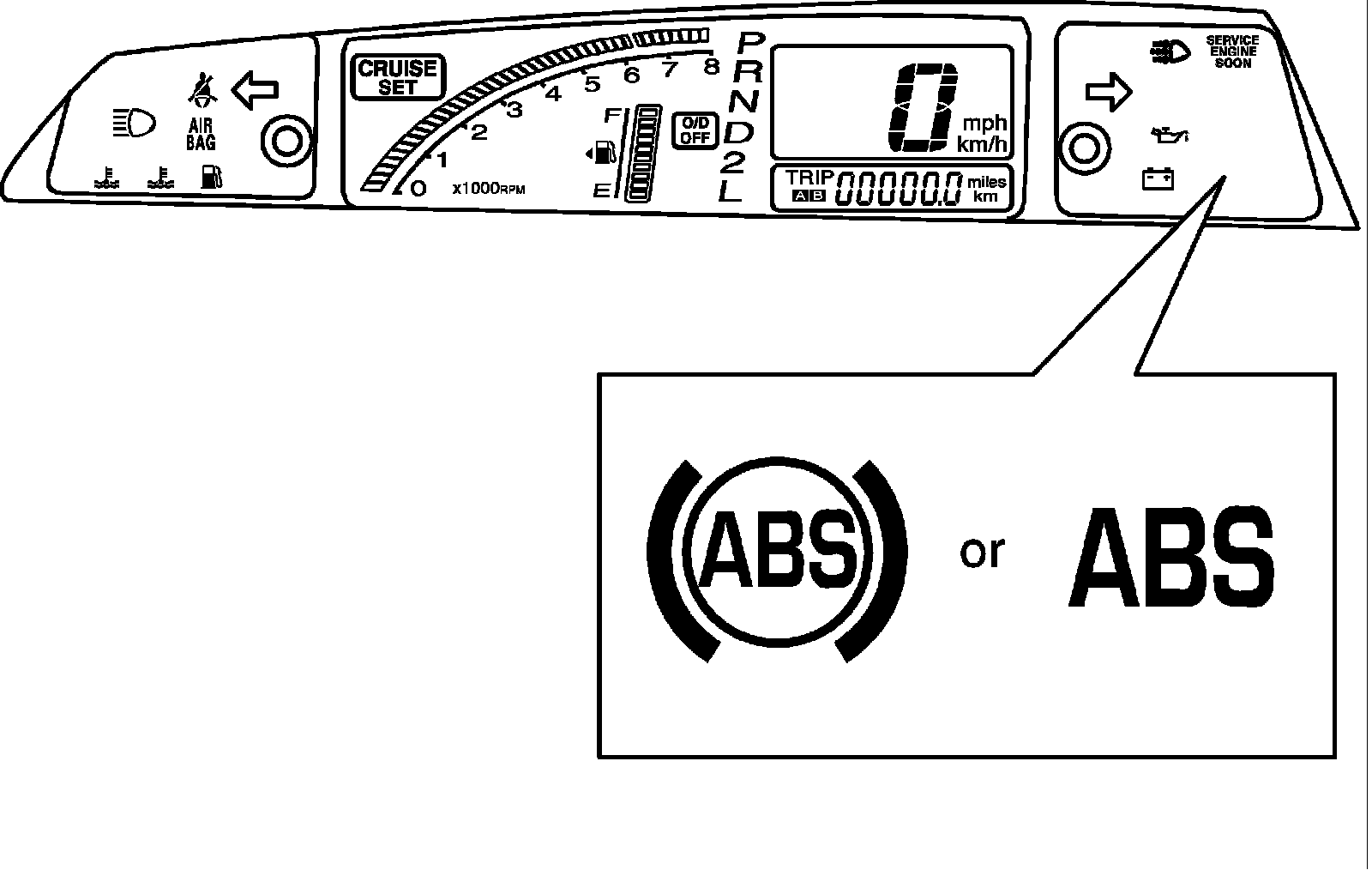
^ When ignition switch is turned ON, ABS warning lamp lights for 2 seconds to check its circuit.
^ When no abnormality has been detected (the system is in good condition), ABS warning lamp turns OFF after 2 seconds.
^ When an abnormality in the system is detected, ABS warning lamp lights and the area where that abnormality lies is stored in the memory of EEPROM in ABS control module.
^ When connecting SUZUKI scan tool to DLC or short-circuit between diag. switch terminals of monitor connector, the abnormal area is output as DTC. It is indicated by flashing of ABS warning lamp or indicated DTC No. on SUZUKI scan tool. (Refer to the following table.)
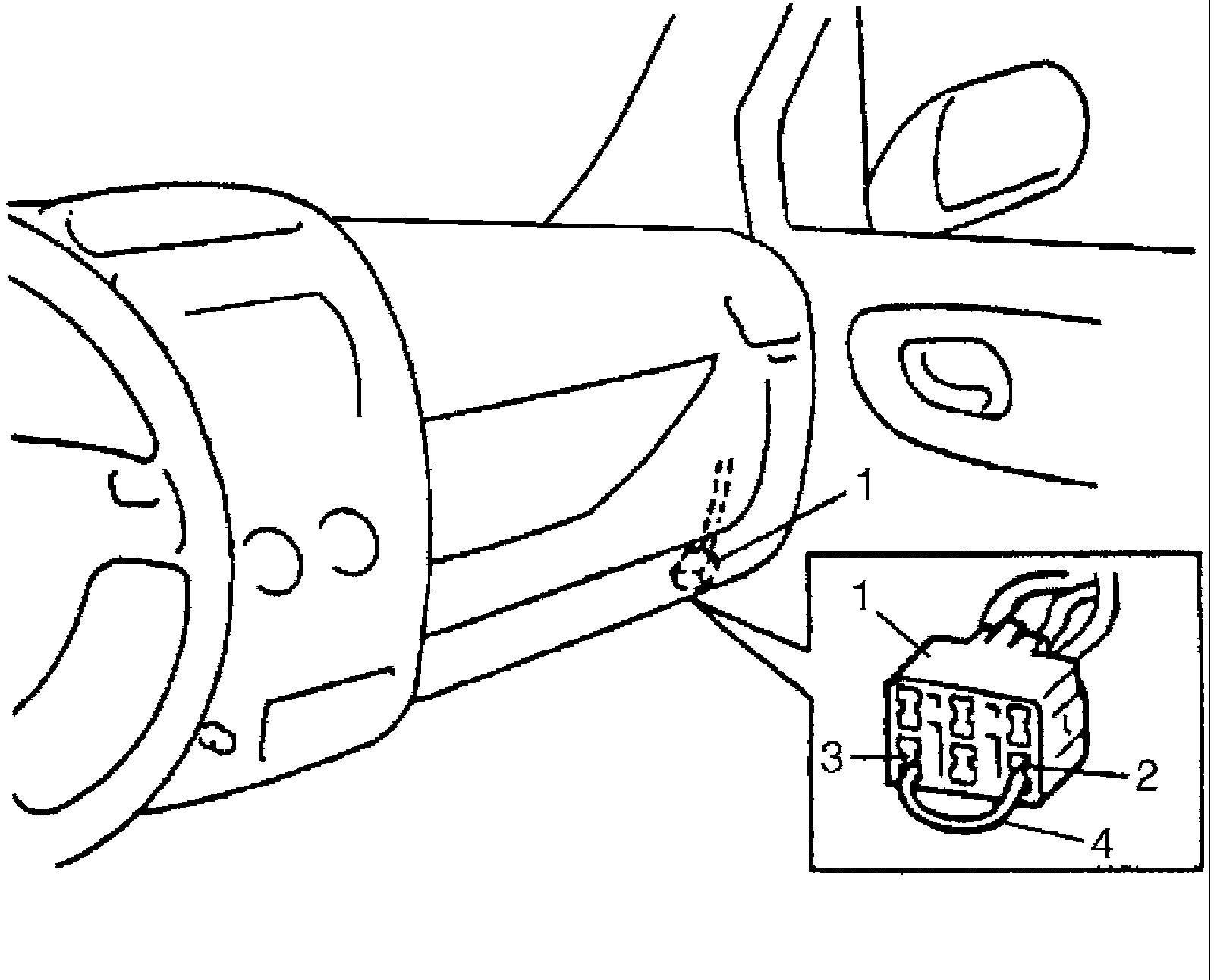

^ For procedure to clear all DTCs, refer to DTC Clearance.
Also ABS control module turns ON EBD warning lamp (brake warning lamp) depending on the trouble and EBD warning lamp does not indicate DTC.
Fail-Safe Function
When an abnormality occurs (an abnormal DTC is detected), ABS control module turns OFF the fail-safe relay (transistor) which supplies power to it self. Thus, with ABS not operating, brakes function just like the brake system of the vehicle without ABS.
Fail-Safe Operation Table
