Evaporative Emissions System: Description and Operation
Fig. 32 Charcoal canister:
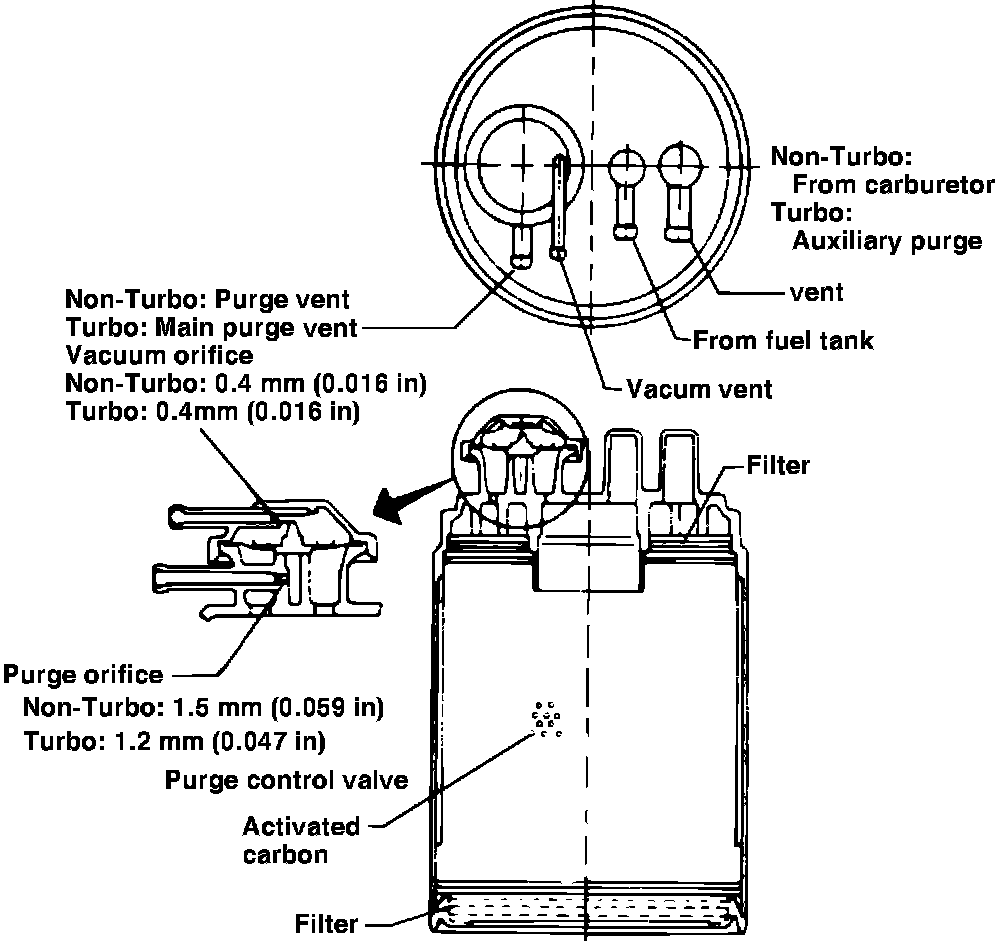
Fig. 33 Two way valve.:
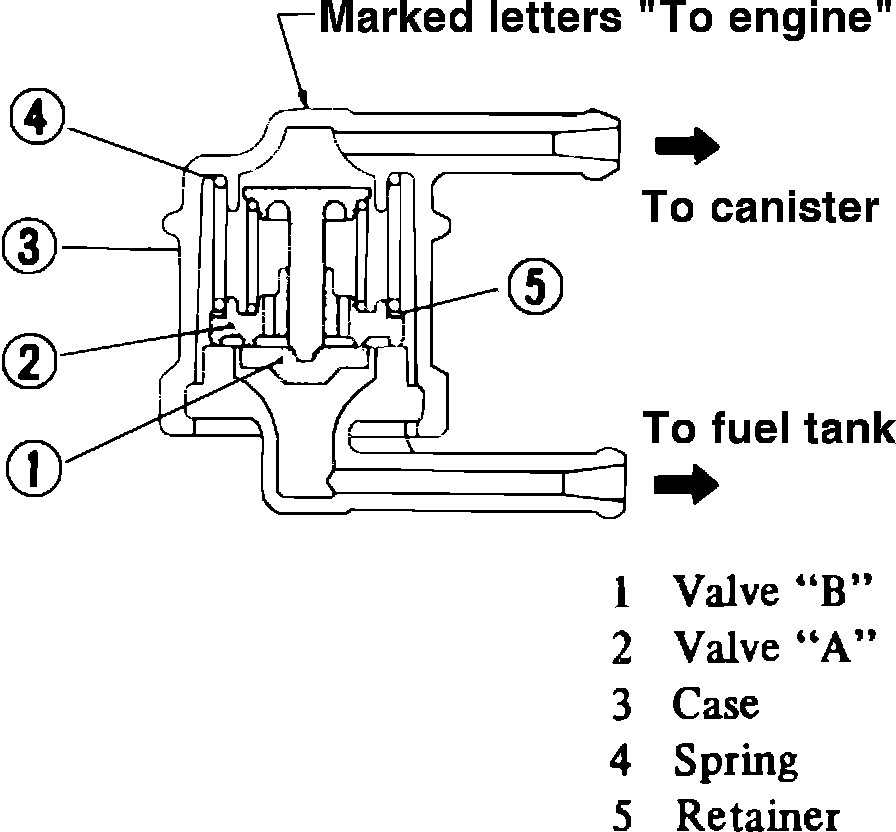
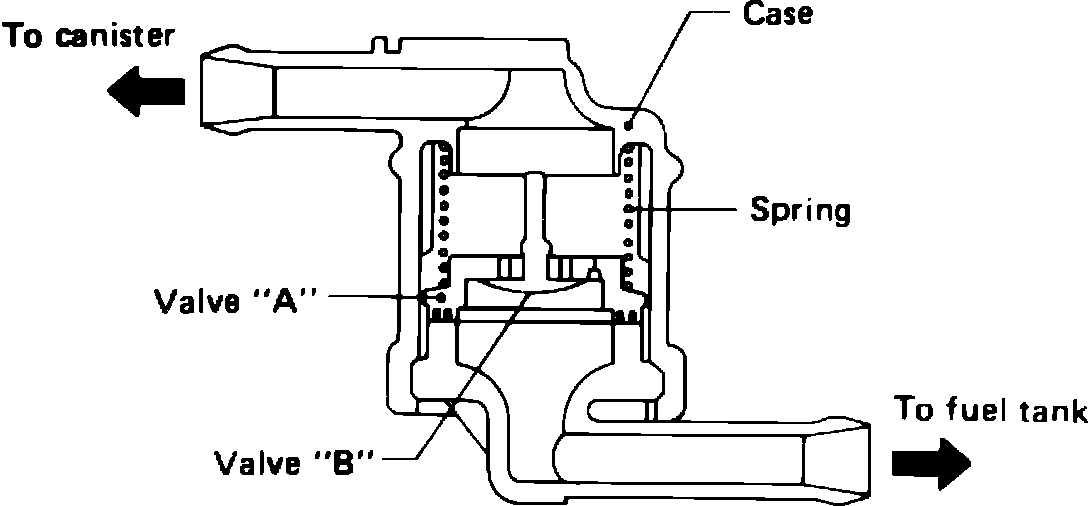
Fig. 34 Two way valve.:
The evaporative emission control system is employed to prevent evaporative fuel in the fuel tank from being discharged into the atmosphere.
Components for this system consist of a charcoal canister, Fig. 32, two-way valve, Figs. 33 and 34, purge control valve, thermal vacuum valve, solenoid valve, check valve, and vapor separator.
Fuel vapor evaporated from the fuel tank is routed into the canister located in the engine compartment. When the engine is idling, this vapor is stored in the canister because the purge valve on the canister is closed by the force of high intake manifold vacuum. During this time, the vapor is absorbed in the activated charcoal particles.
As the engine speed is increased, the purge valve opens because the vacuum in the carburetor above the throttle valve becomes as high as the vacuum in the intake manifold and the return spring overcomes the vacuum force to raise the purge valve. The absorbed vapor is drawn from the canister into the intake manifold through the open purge valve and purge hose. While the purge valve is open, fresh air is drawn into the canister through the bottom filter, purging the absorbed vapor from the activated charcoal.
When the engine is not running, the purge valve is opened by the return spring but the vapor remains in the canister because there is no vacuum to draw the vapor out of the canister at this time.
PURGE CANISTER
The purge control valve on the purge canister is controlled by intake manifold vacuum. When the purge control valve is opened, absorbed fuel vapor is drawn from the canister into the intake manifold. When the engine is not operating, the purge control valve is opened by a return spring. The vapor remains in the canister until vacuum is applied to the purge canister and is routed to the intake manifold.
PURGE CHECK VALVE
The purge check valve shuts off the purge line when the engine is not operating and when evaporative gas has bypassed the purge canister. The purge check valve prevents evaporative gas from entering the intake manifold and accumulating there. This prevents increased HC emission.
VACUUM RELIEF VALVE
The vacuum relief valve is incorporated in the fuel tank in case of severe fuel leakage. In normal operating conditions, as vacuum develops in the fuel tank, atmospheric pressure forces vacuum relief valve spring downward opening the valve. Air is led into the fuel tank controlling fuel tank pressure.
VAPOR SEPARATOR
The vapor separator prevents liquid fuel from flowing into the purge canister.
TWO-WAY VALVE
This valve controls fuel vapor flow between charcoal canister and fuel tank and is operated by fuel tank pressure.